
RETROFIT ROBOTICS FOR CONSTRUCTION MACHINERY
Turn your machine
into a robot.
Retrofit your existing machine
to unlock remote control and autonomous operation.
NEWS
Latest News
Our Official Website Renewed
We have launched a renewed version of the OEDO Dynamics corporate website.
READ MOREarrow_forward Two machines operated remotely at once on a Sanyo Construction grading site
A single operator remotely controlled two machines simultaneously during part of a site-grading project.
READ MOREarrow_forward Successful demo operating a Japanese machine remotely from Bangladesh
We remotely operated a machine located in Japan from a base roughly 5,000 km away over the network.
READ MOREarrow_forwardTHE ISSUE
Facing the reality of the jobsite with automation
The workforce is halving. We break down the labour-saving targets set by Japan’s i-Construction 2.0 policy and the two barriers that keep automation from spreading.
Why is automation necessary?
A shrinking workforce and national labour-saving targets. Two facts that make automation inevitable.
Construction volume keeps rising. The workforce plummets.
Construction investment vs. construction workforce
Source: MLIT “Trends in construction investment, licensed contractors and workers”, and estimates by the Construction Price Research Institute / NRI (2010 = 100; figures from 2030 are projections).
Labour shortage and i-Construction 2.0
MLIT i-Construction 2.0 (2040 targets)
Labour saving on site
at least 30 % cut
Site productivity
1.5 ×
The “three automations” behind the targets
But automating the construction work itself faces real hurdles
Why is automating construction machinery so hard?
Two structural barriers that block automation on the jobsite.
Machines must be ridden by a human to move
A computer cannot drive them
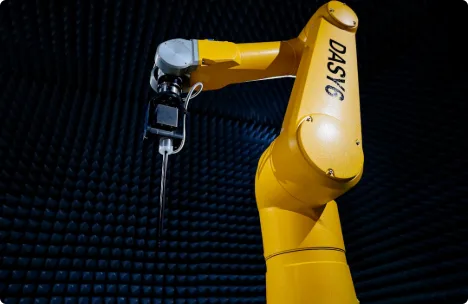
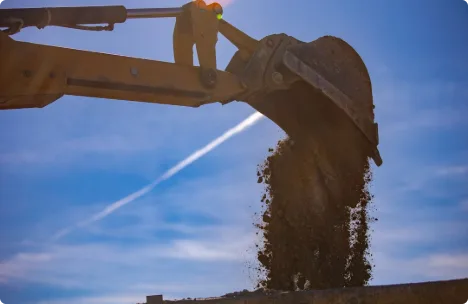
Civil works have complex tasks and environments
Harder to fully automate than logistics or manufacturing
| Logistics / Mfg. | Civil works |
|---|---|
| Indoors | Outdoors |
| No unknowns | Unknowns everywhere |
| Identical motions | Motions differ every time |
| Layout barely changes | Layout changes by the hour |
SOLUTION
Three lines of automation
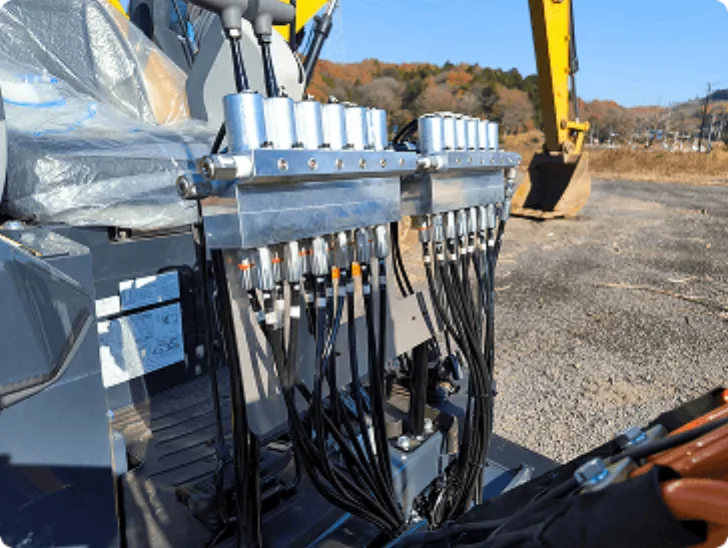
OEDO Controller
A patent-pending intervention device that retrofits 93% of machines on the market, intervening in both hydraulic and electrical systems.
View detailsarrow_forward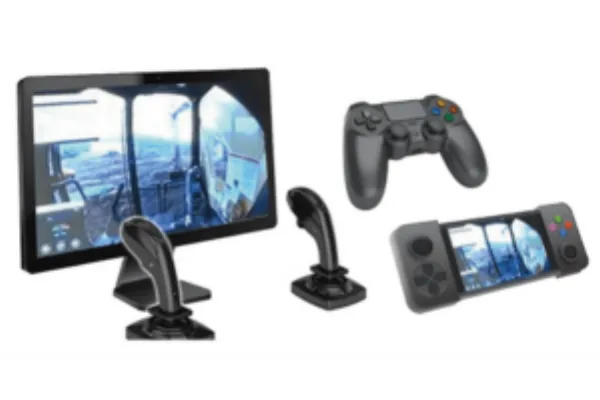
OEDO Remote Deck
Video latency of 80–200ms. From radio control to ultra-remote operation over the network — move machines from anywhere in the world.
View detailsarrow_forward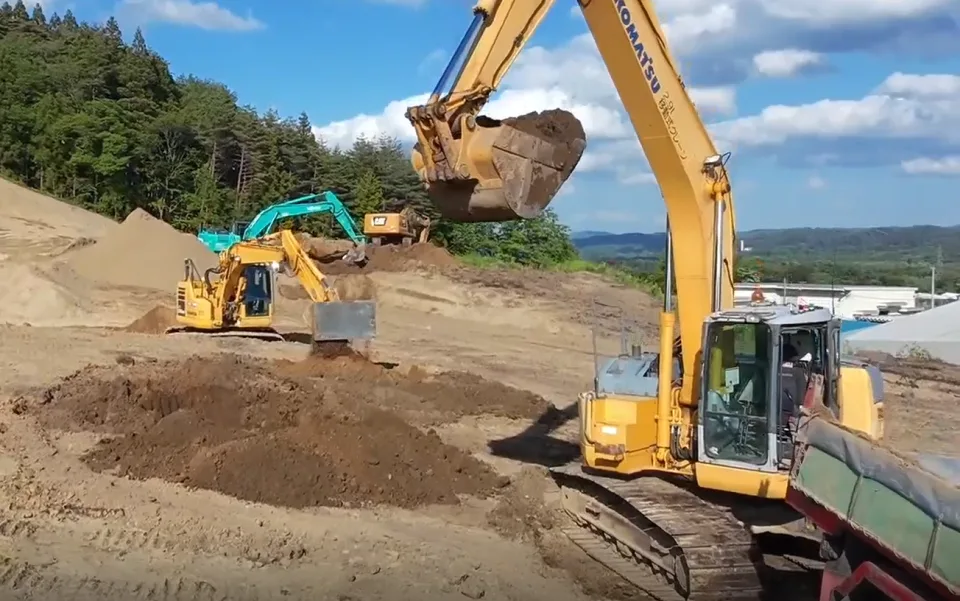
OEDO Auto Deck
External data acquisition and object recognition enable partial autonomy, letting one operator monitor and control multiple machines.
View detailsarrow_forwardOEDO Simulator
The industry's only simulator that reproduces construction machinery, sensors, and soil models — for operator training and pre-validation of autonomous-driving development.
Learn morearrow_forwardWORKS
Already moving in the field
One operator, two machines
Sanyo Construction / Site grading
Learn morearrow_forwardOperating Japanese machines from 4 countries
Las Vegas / Singapore / Brazil / Bangladesh
Learn morearrow_forwardOpening employment for people with disabilities
A new way of working through remote operation
Learn morearrow_forwardPROCESS
Deployment in four steps
Machine Survey
Check hydraulic & electrical systems
Manufacturing
Remote device / mounting jigs
Installation
Mounted at our field site
Tuning & Operation
Adjustment and verification
CONTACT
You can still operate that machine.
From confirming whether your machine is compatible to discussing a proof-of-concept trial — please feel free to reach out.